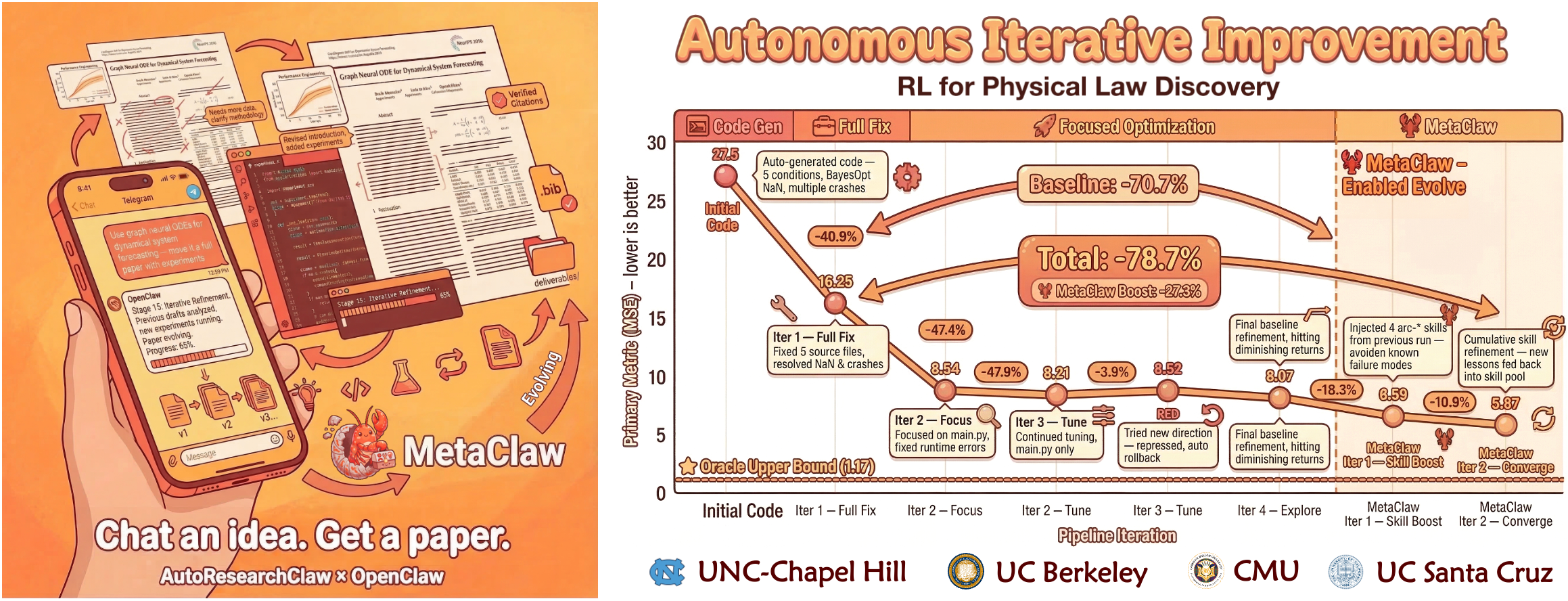
先说判断:AutoResearchClaw 值得认真看,而且不是普通 autonomous research demo。它最重要的地方,是把 “idea to paper” 做成了一条可观察、可评测、可学习的科研生产线。这和 WeHub 当前的 10 Paper Portfolio 正面撞题。
这到底是什么?
根据 GitHub README 和 arXiv 页面,AutoResearchClaw 是一个多智能体 autonomous research pipeline。用户给一个研究想法,系统尝试完成文献、假设、实验、分析、写作、审稿、引用校验和导出。
它不是只生成论文文本。公开 README 中列出的输出包括 draft、conference-ready LaTeX、BibTeX、verification report、experiment runs、charts、multi-agent reviews 和 cross-run learning artifacts。
论文摘要给出的核心机制包括 structured multi-agent debate、self-healing executor、Pivot / Refine decision loop、verifiable result reporting、human-in-the-loop collaboration 和 cross-run evolution。作者还在 arXiv 摘要里声称,在 ARC-Bench 上相对 AI Scientist v2 有明显提升。
边界要讲清楚:这些是项目和论文自己的 claim。我们应该认真读、复现、对比,但不能在没有 dogfood 之前把它当作已验证真理。
为什么它很强?
1. 它把 research 视为 pipeline,不是写作任务
很多 AI research tool 本质还是“帮我写 introduction / related work / method”。这类工具提升的是局部文本生产。AutoResearchClaw 的野心更大,它把 research 拆成一组阶段:
scope -> literature -> synthesis -> hypothesis -> design
-> execution -> analysis -> decision -> writing -> review -> finalization
这接近 WeHub 现在应该补齐的东西。10 Paper Portfolio 如果只是让 agent 多写几篇 paper,会很快滑向 paper mill;但如果每个候选都有 scoping、opponents、experiment path、reviewer objections、kill / park / continue 决策和 capability feedback,它就能为未来 WeHub 定制 paper-production system 留下证据。
paper 是交付物,pipeline 才是长期资产。
2. 它没有把 autonomy 和 human judgment 对立起来
我最看重的不是 full-auto,而是它后来加入的 HITL / Co-Pilot 系统。README 里有多种 intervention modes,从 full-auto、gate-only 到 checkpoint、co-pilot、step-by-step。更关键的是,它把人类介入放在高杠杆节点:hypothesis、baseline、paper writing、quality gate。
这和 WeHub 的方向非常一致。我们不是要让 agent 替代研究者,而是让人类注意力进入最有价值的位置:选择问题、判断 novelty、指定 baseline、看穿实验设计漏洞、决定 pivot or kill、修正 claim 的语气和证据边界。
高质量 autonomous research 应该最大化单位人类注意力对 research trajectory 的控制力。
3. 它把失败当成信息
AutoResearchClaw 的 Pivot / Refine loop 很值得注意。实验失败、code crash、metric 不显著、hypothesis 不成立,传统流水线会把这些看作异常;但真正的科研里,失败经常是信息源。
diagnose failure
-> decide refine / pivot / stop
-> preserve lesson for future runs
这对 WeHub 很关键。我们不能只追求“产出 10 篇 paper”,而要追求每个失败候选都能留下可复用资产:哪个 SOTA opponent 太强,哪个实验路线不可行,哪种 claim 容易虚,哪类 baseline 一定要补,哪种题目看似漂亮但没有 evidence path。
4. 它开始把 autonomous research 做成 benchmark 问题
项目页面提到 ARC-Bench。arXiv 摘要说的是 25-topic experiment-stage benchmark;README 的 2026-05-19 更新又提到扩展为 55-topic open-ended autonomous-research benchmark。
这说明它的团队很清楚:如果没有 benchmark,autonomous research 很容易只剩 demo 视频和单次 showcase。WeHub 也应该学这一点。10 Paper Portfolio 不能只问“产出了吗”,要问 claim 是否清晰、opponents 是否找对、evidence path 是否真实、experiment 是否可复现、human intervention 是否减少误判、memory writeback 是否让下一轮变强。这才是未来 WeHub 定制 paper-production system 应该继承的评测语言。
对 WeHub 的直接意义
外部 baseline
它可以倒逼 10 Paper Portfolio 检查 candidate state、gate、verification、reviewer objections 和 capability feedback。
架构参照
它把 stage、artifact、decision、archive 组织起来,提醒我们 dashboard 不能替代 research state。
dogfood 对象
它适合拿一个中低风险候选跑 co-pilot,不适合一开始把最核心 HCGM claim 交给 full-auto。
评测语言
它提示 WeHub 用 benchmark、claim verification、citation verification 和 human intervention log 评价科研生产质量。
它会倒逼我们区分三件事
- Research source:真正的思想源,如 Causality Primer、HCGM、DiscoSCM、CausalLLM。
- Delivery program:把候选压成 paper package,如 10 Paper Portfolio。
- Future production-system evidence:让这个过程未来有机会变得可重复、可评测、可学习,如 Team OS + templates + state + memory writeback。
这三个东西不能混。AutoResearchClaw 的出现,反而能帮助我们更清楚地分层。
不能盲目照搬的地方
我现在不会建议马上把 WeHub 全部接到 AutoResearchClaw 上。原因很简单:科研不是 generic paper factory。尤其是我们的核心研究线有很强的 owner prior、因果理论直觉、HCGM / DiscoSCM 的概念边界,以及非常具体的读者和投稿压力。
直接 full-auto 跑,可能会生成“像论文”的东西,但 claim 不够硬;baseline 看起来完整,但没有打到真正 opponent;experiment 能跑,但不是我们最想证明的点;paper 写得顺,但把 Causal Primer / HCGM 的原创边界抹平。
最好的使用方式不是 full-auto,而是 co-pilot / gate-heavy / benchmark-style dogfood。
STORM 式结局风险
更锋利的判断是:AutoResearchClaw 可能不是 STORM 的反面,而可能是 STORM 的下一代同构风险。
STORM 的逻辑在 knowledge curation / pre-writing 层成立,但它容易被误读成完整 research system。AutoResearchClaw 表面上补齐了 STORM 缺的东西:实验、pipeline、HITL、verification、cross-run learning、benchmark。但真正要红队的是:
这些模块有没有形成持续成长的因果闭环,还是只是把“看起来像科研生产线”的外壳做得更完整?
真正的红队问题不是它能不能生成 paper,而是它的 growth claim 是否成立。
真学习还是日志归档
lesson / skill / memory 只有在新 topic、新领域、新失败模式中降低错误率,才算让系统变强。
benchmark 奖励了什么
跑完 stages、生成 LaTeX 和 charts,不等于产生投稿级 claim;流程完整可能掩盖问题不重要。
pivot 是否真的会 kill
强系统要能停掉坏 idea;弱系统会不断 refine,直到产出 paper-shaped artifact。
HITL 是否吸收 judgment
多几个 approval gate 不等于高质量协作;关键是知道何时问人、问什么、如何改变后续策略。
run experience
-> error / judgment / review signal
-> durable representation
-> changed future policy
-> externally better outcome
少任何一环,都只是 workflow automation,不是持续成长系统。AutoResearchClaw 最大的风险不是生成不了 paper,而是生成太多“看起来进入科研流程”的 paper-shaped artifacts,却没有形成真实的 research selection loop。
我建议的吸收路径
第一步:保留这篇认知文章
先把它从“这个太强了”压成几个可讨论判断:它是什么,claim 来自哪里,强在哪里,和 WeHub 的 10 Paper Portfolio 有什么关系,哪些地方要 dogfood 后再信。
第二步:做一个 source reading map
不要只读 README。应该至少看 arXiv paper、GitHub README、HITL / integration / domain guide、ARC-Bench、generated paper showcase、`RESEARCHCLAW_AGENTS.md` 和 pipeline stage implementation。
第三步:拿一个低风险 paper candidate dogfood
不要一上来跑最核心的 HCGM 强 claim。先选一个中等风险候选:题目足够清晰,SOTA opponent 容易找,实验路径相对轻,即使输出一般,也能帮我们评估 pipeline。
mode: gate-only or co-pilot
avoid: full-auto for core claims
第四步:反向更新 10 Paper Portfolio
dogfood 完以后,不急着“采用工具”,而是先更新我们自己的 schema / template / eval:paper-card 是否要加 `pipeline_stage`,sprint feedback 是否要加 `human_intervention_log`,kill matrix 是否要加 `failed_but_learned`,candidate evidence 是否要加 `citation_verification`,Team OS 是否要展示 `gate_needed`。
阶段性结论
AutoResearchClaw 非常值得深入了解。
但它对 WeHub 的最大意义,不是“我们也要做一个自动写论文工具”,而是:
它把 autonomous research 从生成文本推进到了 pipeline、gate、verification、benchmark、cross-run learning 和 human-AI collaboration 的系统问题。
10 Paper Portfolio 如果做得好,不只是产出论文;它会给 WeHub 留下科研生产能力的 evidence。AutoResearchClaw 是目前我看到的、最值得拿来对照和 dogfood 的外部系统之一。
真正值得追求的不是:
Chat an Idea. Get a Paper.而是:
Chat an Idea.
Grow a Research Trajectory.
Get a Paper when the evidence deserves one.
Make the research system stronger either way.- AutoResearchClaw GitHub repository: https://github.com/aiming-lab/AutoResearchClaw
- AutoResearchClaw arXiv page: https://arxiv.org/abs/2605.20025
- ARC-Bench dataset link from README: https://huggingface.co/datasets/AIMING-Lab-UNC/ARC-Bench